
DAVINCI VALVES Actuation Methods: Manual, Electric, Pneumatic or Hydraulic? 🔍
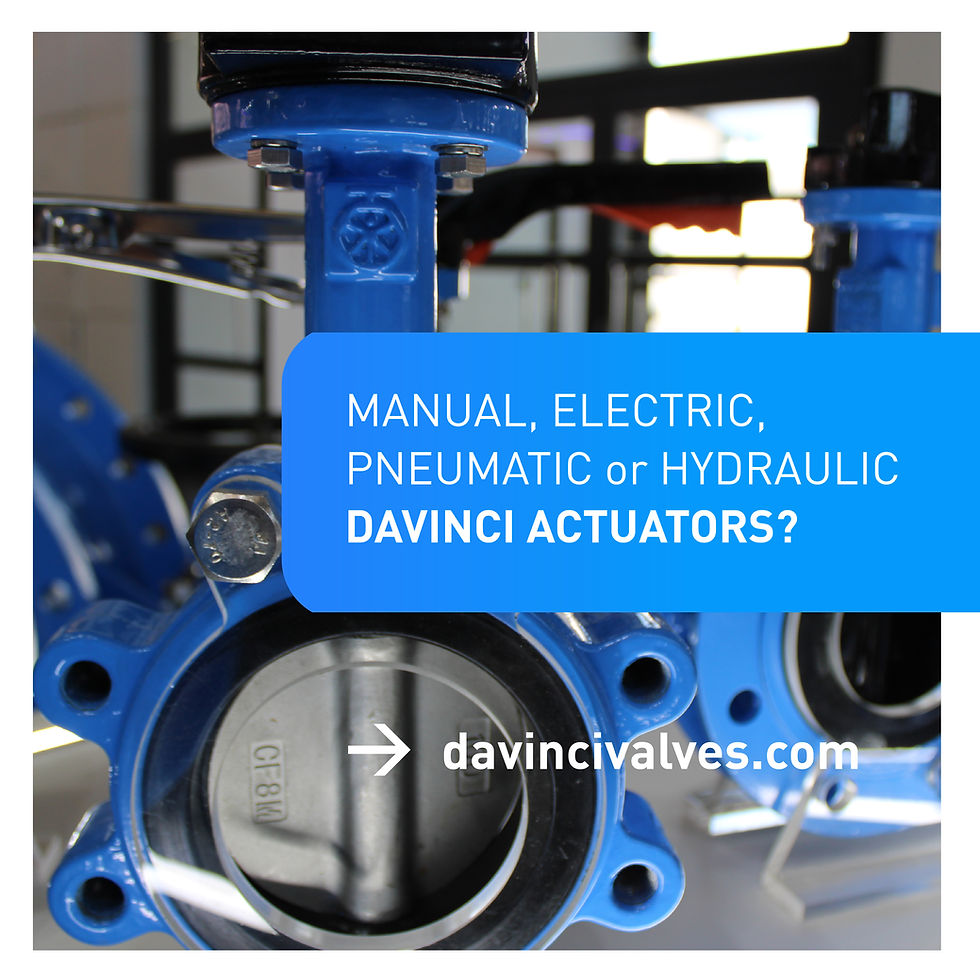
Manual and Automated Valve Operation
A valve's performance does not depend only on its design or materials. Equally important is how the valve is operated. Choosing the right actuation method can improve efficiency, increase safety and reduce operating costs throughout the lifetime of an installation.
Depending on the application, valves may be operated manually or through automated systems that allow remote control and continuous monitoring.
🛠️ 1. Manual Operation
Manual operation is the most traditional and widely used method of controlling a valve. In this configuration, the valve is operated directly by an operator using a handwheel, lever or gearbox.
Engineers often select manual operation when valves are not required to open or close frequently, when the installation has no access to power, or when simplicity and reliability are the main priorities.
The main advantages of manual operation include:
Simple and reliable design
No external power supply required
Low installation and maintenance costs
Long service life
For this reason, manually operated valves remain extremely common in water distribution networks, irrigation systems and municipal infrastructure projects.


💡 Interesting Fact: Some manually operated valves installed in European water networks during the 1960s are still in service today, demonstrating how robust engineering can provide decades of reliable performance.
⚡ 2. Electric Actuation
Electric actuators use an electric motor to open, close or regulate a valve automatically. They are commonly connected to control systems, allowing operators to manage infrastructure remotely.
Engineers typically choose electric actuation when precise positioning, remote operation and system integration are required.
Electric actuators are widely used in:
Water treatment plants
Desalination facilities
Pumping stations
HVAC installations
Industrial processes
Their key benefits include:
High positioning accuracy
Remote operation capability
Easy integration with SCADA and automation systems
Reduced need for on-site intervention
As infrastructure becomes increasingly digitalized, electric actuation continues to gain importance across modern utility networks.

💡 Interesting Fact: Today, operators can monitor and operate valves located hundreds of kilometres away from a central control room, thanks to modern electric actuators and communication systems.
💨 3. Pneumatic Actuation
Pneumatic actuators use compressed air to operate a valve. They are particularly popular in industrial environments where fast response times and frequent operation are required.
Engineers often select pneumatic actuation when speed, reliability and high operating cycles are more important than extremely precise positioning.
The main advantages include:
Fast opening and closing speeds
Reliable operation in demanding environments
Suitable for high-cycle applications
Reduced risk in hazardous industrial areas
Pneumatic systems are commonly found in chemical plants, manufacturing facilities, food processing industries and automated production lines.


💡 Interesting Fact: Pneumatic technology has been used in industrial automation for more than a century and remains as a standard method for operating process valves worldwide.
💧 4. Hydraulic Actuation
Hydraulic actuators use pressurized fluid to generate large amounts of force. This makes them ideal for operating large valves or installations where high torque requirements exceed the capabilities of other actuation methods.
Engineers generally choose hydraulic actuation when dealing with:
Large-diameter valves
High-pressure systems
Heavy-duty industrial applications
Critical infrastructure projects
Their primary benefits include:
Exceptional operating force
Reliable performance under heavy loads
Suitable for extreme operating conditions
Excellent control of large valves
Hydraulic actuators are frequently used in mining operations, hydropower facilities and major water transmission projects.
💡 Interesting Fact: Some hydraulic systems are capable of generating enough force to operate valves weighing several tonnes, even under extreme pressure conditions.
At DAVINCI VALVES, we help engineers, contractors and utility operators select the right valve and actuation system for WATER, WASTEWATER, IRRIGATION, HVAC and INDUSTRIAL applications worldwide.
Speak to our TEAM how we can help your COMPANY to get QUALITY VALVES with a GREAT VALUED PRICE:
Equip your water projects with the best. Contact us today and request your free samples: zuzana@davincivalves.com🤝
#GateValvesitaly #DM174 #PotableWater #WaterIndustry #Infrastructure #ValveSolutions #Engineering #MadeForQuality #ItalyMarket #GateValves #WaterSolutions #WRASCertified #CECertified #PotableWater #WaterIndustry #Engineering #QualityMatters #Infrastructure #WaterSystems #WaterManagement #FluidControl #RequestAQuote #IndustrialValves #SafeWater #Efficiency #SustainableSolutions #Davincivalves #samplesvalves #WaterconnectionsDavinci #Safevalves #safetyvalves #valvesknowledge #Davincivalveswater #Davinciflowlessons #manufacturingvalves #valvesproduction #watervalves #productionDavincivalves #successstoryDavinci #waterregulationvalves #controlvalves #waterprojects #planningwatervalves #engineeringvalves #efficientvalves #valvespotablewater #valves #watersuppply #qualityDavincivalves #DavincivalvesNews #epoxyDavincivalves #DavincivalvesWRAS #partnershipDavinci #watersupplyDavinci #watersupplynetwork #gatevalves #safetyvalves #Davincivalvesexpertize #Watervalves #Davinciquality #WRASvalves #valvulasaguapotable #valve #resilientaseatgatevalves #watermanagement #waterindustry #watertreatment #fluidsolutions #fluidsystems #floodprotection #hydrovalves #wastewatersolutions #wastewatervalves #potablewater #cleanwatersolutions #qualityvalves #inoxballvalves #Irrigationvalves #EngineeringExcellence #PotablewaterSolutions #WaterManagement


